
Searching Todd County Criminal Dockets
Start with Minnesota Court Records Online, or MCRO. Pick the Criminal category. Set Todd County as the location. A person search takes last, first, and middle name fields. A business search takes the business name. Try the exact spelling first. If the spelling is shaky, run a separate Sounds Like search. Or add a trailing wildcard after at least two characters. Do not combine those two methods.
MCRO can narrow a Todd County criminal docket search with Date Filed or a date range. Date of birth, location, and a live Case Status control help too. Sort results Newest First or Oldest First, print them, or open View Case Details. The detail view shows the Register of Actions. Public hearing information and any public document links appear there as well. Keep in mind that MCRO is an unofficial public-access service, not a certified record source.
- Open MCRO and choose the Criminal case category and Todd County location.
- Search by exact name, complete case number, citation number, or attorney where that field fits the record.
- Open the matching result and confirm the court location, case category, and complete identifier.
- Read the Register of Actions in date order, then check public hearing or document links.
- Contact Court Administration for an older, restricted, paper, or certified criminal record.
Minnesota's criminal-record guidance lays out the public access context that sits behind a Todd County criminal docket search.
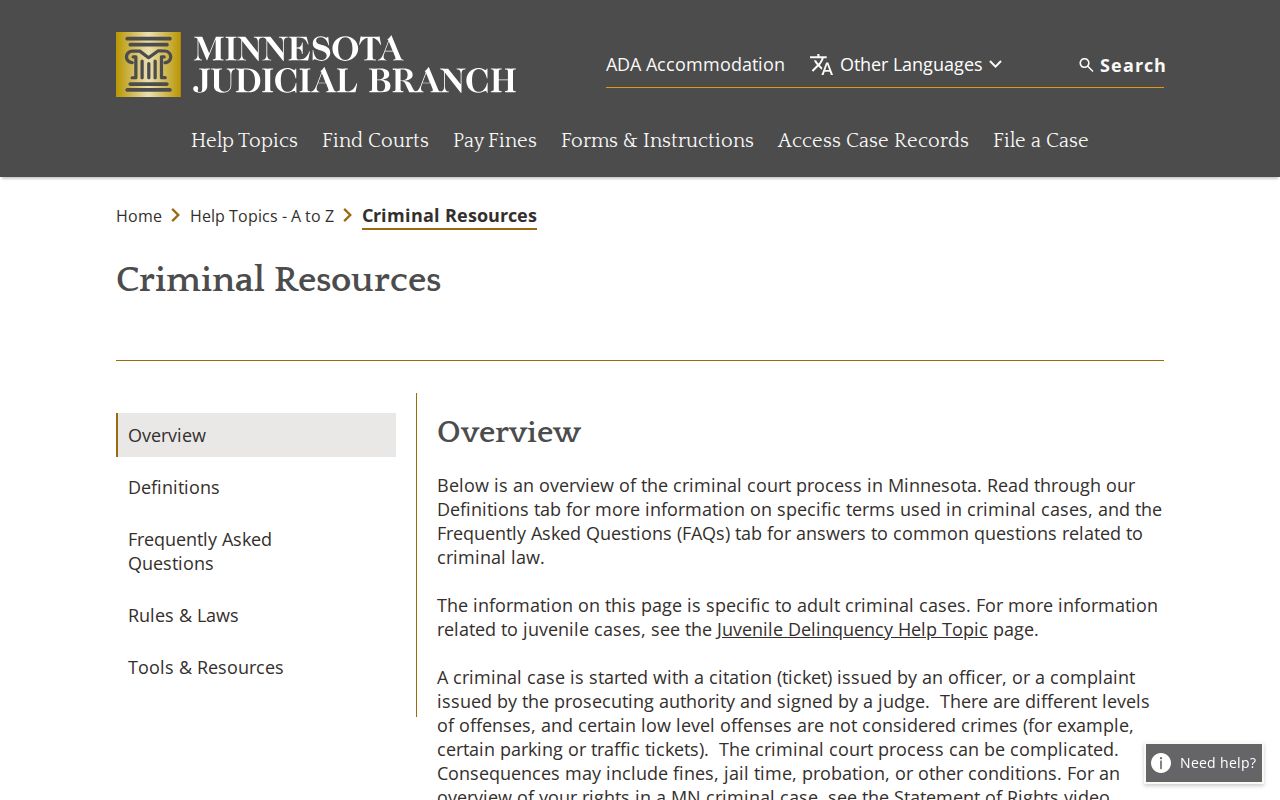
The public record tools come first on the access path. Court Administration answers the questions a remote result cannot.
Todd Criminal Docket Number Limits
A complete number is the strongest identifier for a Todd County criminal docket. Minnesota case and citation numbers may be entered with or without dashes and leading zeroes. Spaces are not allowed. Todd calendar samples use a 77- county prefix. But that prefix alone cannot identify a record. The usual Minnesota number structure also includes a case-type portion, year, and sequence.
A citation number is not the same as a court file number. If a number search fails, confirm which number you hold. Strip out spaces, and try the complete value instead of guessing a shortened form. Minnesota's citation and case-number instructions describe the distinction. When the complete identifier is missing, Court Administration can help identify the correct local route.
Inside a Todd County Criminal Docket
The Todd County criminal docket is the case's Register of Actions, not just a calendar entry. It usually gathers public case information, party and attorney roles where available, hearing information, chronological activity, and public documents subject to the access rules. Read the dates and event text in order. A calendar is a schedule snapshot. The Register records activity. A document is the underlying filing.
| Case number | The complete Minnesota court file or citation identifier, with Todd samples beginning 77-. |
|---|---|
| Case information | Category, court location, filing or opening date, status, and public party-role labels. |
| Register of Actions | Chronological event date, event type, event text, filings, orders, and activity where public. |
| Hearing information | Date, time, location, judicial officer, and hearing type when listed for public access. |
| Documents or judgment | Public document names and dates, plus any disposition or judgment information that the rules allow. |
A charge or offense entry shows what was filed or recorded. It is not proof of guilt. Read any disposition or judgment exactly as displayed, together with its date. If no public document is linked, ask the court before assuming it does not exist.
Todd Criminal Docket Name Limits
A no-result name search has a specific Todd County criminal docket limitation. A pending criminal, traffic, or petty-misdemeanor matter may not appear in defendant-name results. That applies when there is no conviction. A complete case-number search can behave differently. So the absence of a name result proves nothing about a person or a case.
First drop an unknown middle name. Check the punctuation. Then use a separate Sounds Like or wildcard search if it fits. Search statewide when the county is uncertain, and consider whether the matter could be restricted. Public courthouse terminals may offer broader electronic district-court access than remote MCRO. Even so, they do not override confidentiality or a sealing order. If the record matters, call the court.
Note: Record the date of any MCRO search. Register of Actions entries and public-document access can change.
How a Criminal Case Moves
A Todd County criminal Register of Actions can show case opening or charging activity, appearances, omnibus or pretrial activity, motions and orders, trial or disposition, then sentencing or probation-review activity. The event labels carry the useful detail. Never convert a hearing name into an outcome.
Criminal docket flow: filing or charge › first appearance or arraignment › omnibus or pretrial activity › plea or court trial › disposition › sentencing or review.
An arraignment, for instance, is a proceeding where charges are addressed. A plea may be entered there. An omnibus hearing takes up pretrial issues, motions, or case status. Sentencing is a later criminal proceeding and does not follow from every earlier label. The actual Todd County entry controls.
Todd Criminal Docket Calendar Labels
The Todd daily calendar and the criminal Register of Actions do different jobs. The calendar lists a scheduled hearing plus fields like hearing location, date, time, judicial officer, hearing type, connection type, and case number. The Register is the fuller chronological record. A listed hearing can move. An absent calendar entry does not prove cancellation.
Todd County calendar vocabulary includes First Appearance, Arraignment, Omnibus Hearing, Contested Omnibus, Pre-trial, Court Trial, Sentencing, and Probation Violation Hearing. These are official schedule labels, not interchangeable disposition terms. Use MCRO Hearing Search for statewide hearing searching and the Todd daily calendar for the local scheduling snapshot. Printed courthouse calendars stay the most current daily information.
Courts That Hold Criminal Dockets
Todd County criminal dockets live with the Minnesota District Court, Todd County District Court. That court sits in the Seventh Judicial District. District Court serves as the state's trial court of general jurisdiction. Criminal and traffic matters land there, and so do civil, family, probate, and juvenile cases. No separate public municipal-court docket portal exists for Todd County.
City ordinance cases can still be prosecuted. A municipality brings them to trial in District Court. A county attorney working under contract can do the same. Minnesota's statutes on municipal ordinance trials and fine distribution frame how that route works. A city payment page or contact listing does not amount to a separate criminal docket.
Appeals from the Todd County District Court go up to the Minnesota Court of Appeals. That court keeps its appellate record in a separate system. So an MCRO search is not the same as an appellate docket search.
For the court-routing side of a Todd County criminal docket search, Minnesota's municipal ordinance trial framework is the governing statute.
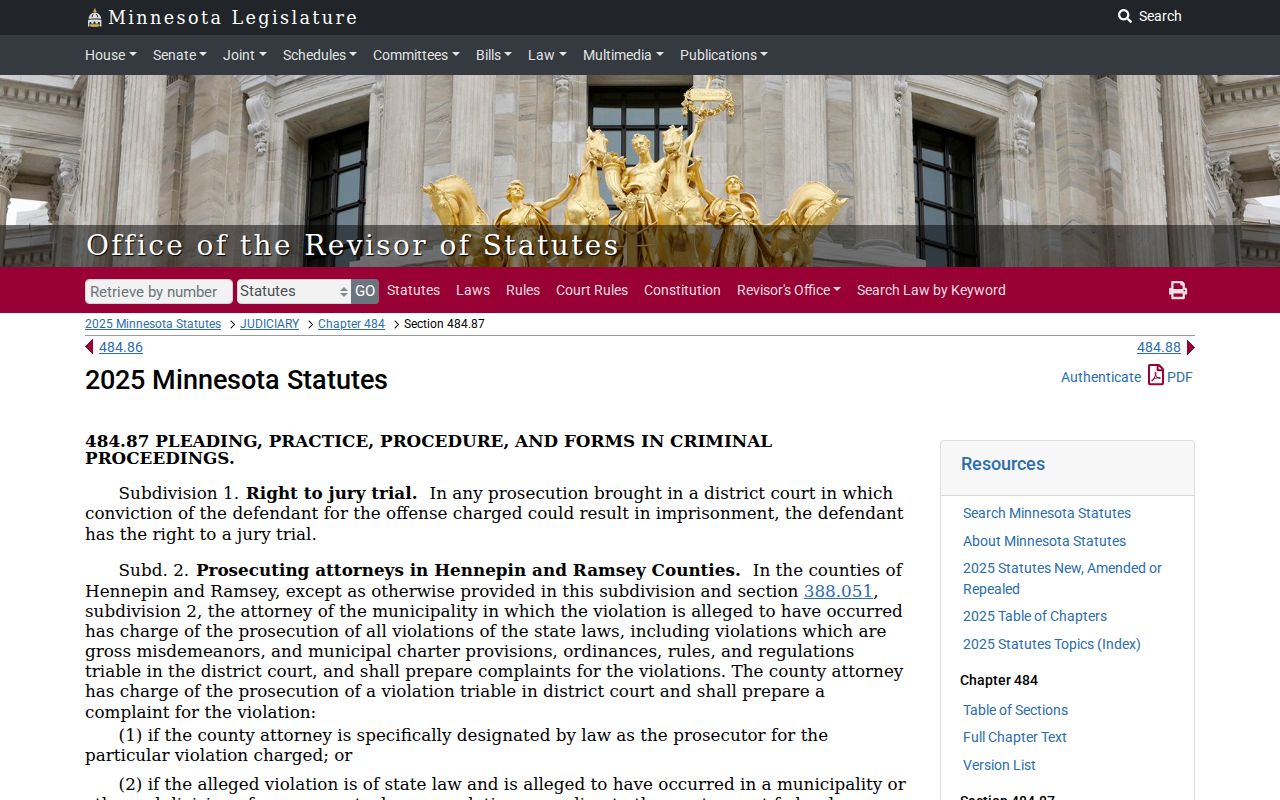
The statute backs up the split between an ordinance prosecution route and the District Court record where public case activity sits. Minnesota's municipal fine-distribution statute adds its own limited routing context.
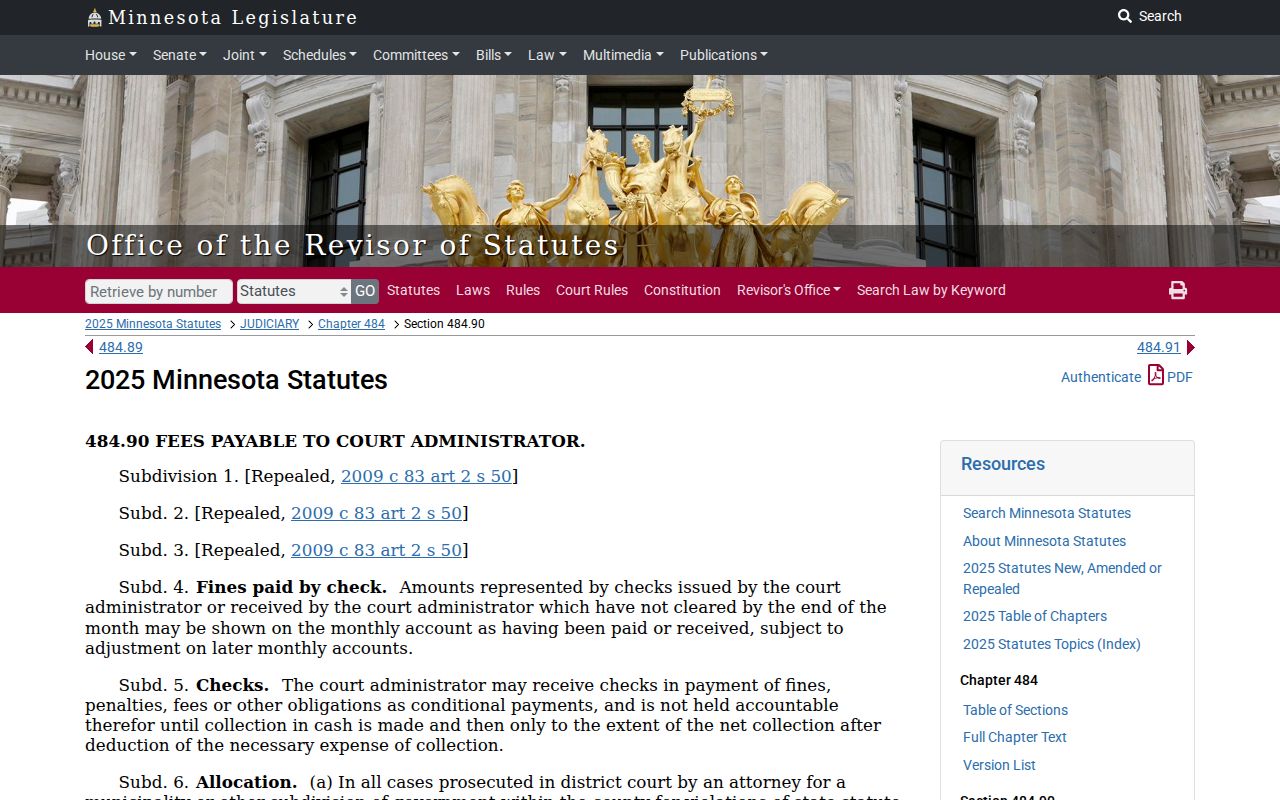
Nothing in that statute builds a new public Todd County criminal docket search system or replaces MCRO.
Todd Criminal Docket Documents After 2015
MCRO Document Search will not run on a name alone or a partial case number. It needs the full number. When you lack it, run Case Search first. The results can display each document's title, event, and date, newest first. Anything you download is a public-access copy. It is not a certified court document.
Online coverage for many public criminal document categories runs wider from July 1, 2015 forward. That cutoff promises nothing in either direction. Some later filings stay offline, and some older cases appear. Classification, confidentiality, and document type still control what you see. For older, paper, or un-imaged material, ask Todd County Court Administration.
Note: A document missing online may reflect an access rule. It may also reflect a filing designation, not a missing court filing.
Sealed Dockets and Public Access
Rule 8 of the Minnesota Rule of Public Access to Records of the Judicial Branch governs this. You may inspect and copy public court records at the place they are normally kept. Remote access stays narrower than what a courthouse terminal shows. The Register of Actions lists the case title, origin, activity, proceedings, and filings. Statutes, rules, and court orders still govern every request.
Juvenile matters, HRO and OFP material, CHIPS cases, and civil-commitment records can all get different treatment. So can medical exhibits, sealed filings, restricted exhibits, and confidential addresses. An empty Todd County criminal docket result is not a statement of a clean record. A complete case number does not override a restriction. Expungement law covers court-ordered sealing and disclosure. It never permits republishing sealed material.
Access limits matter. Minn. Stat. § 260B.163 generally makes juvenile hearings private, with a limited stated exception. Minn. Stat. § 260B.171 sets separate access rules for juvenile legal records. Court Administration can explain the proper request path, but cannot promise access to a sealed record.
For sealed Todd County criminal docket material, the controlling legal framework is Minnesota's expungement statute.
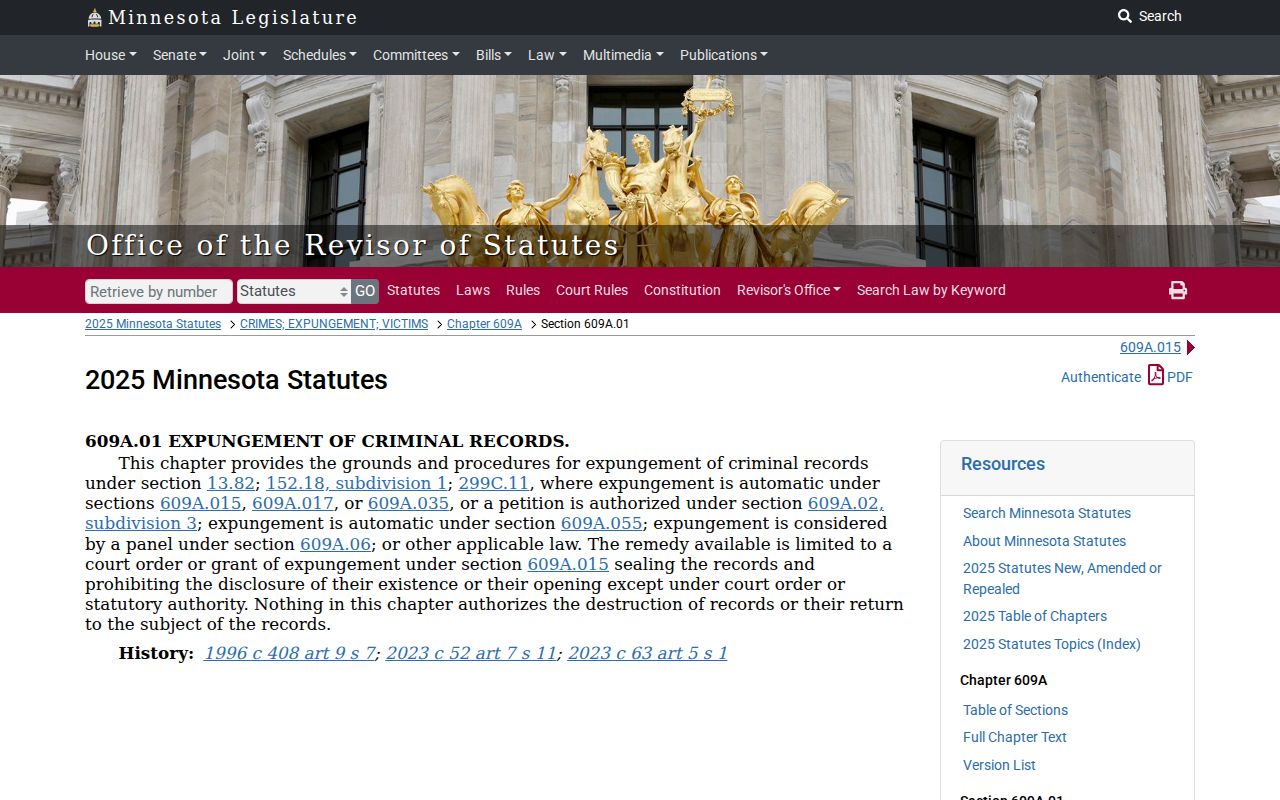
Sealing changes what may be disclosed. It does not let a requester read an online absence as proof that a record was destroyed. Minnesota juvenile record access law appears here because juvenile records demand a distinct Todd County criminal docket access lens.
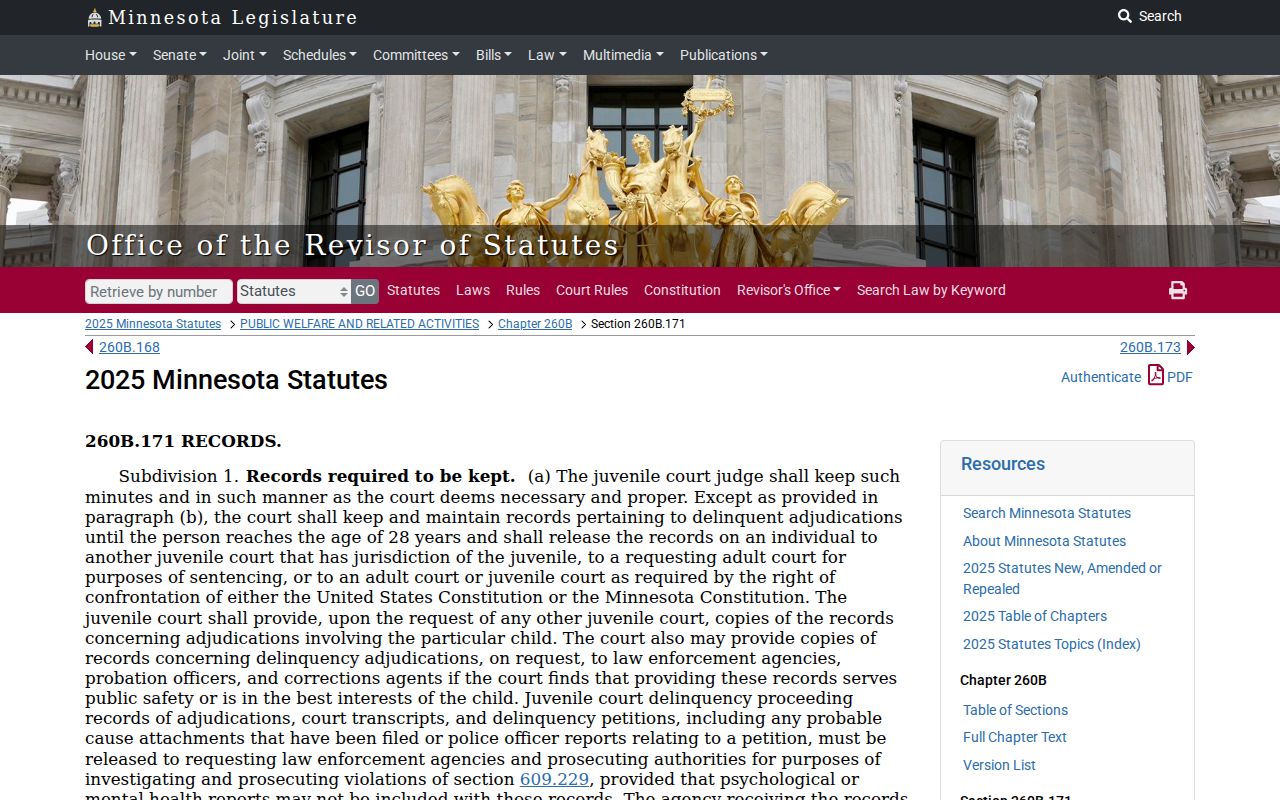
Access to a record under this rule turns on the proceeding and the governing statute or order, not on a general name search. Minnesota juvenile hearing access law supplies the related hearing-access context.
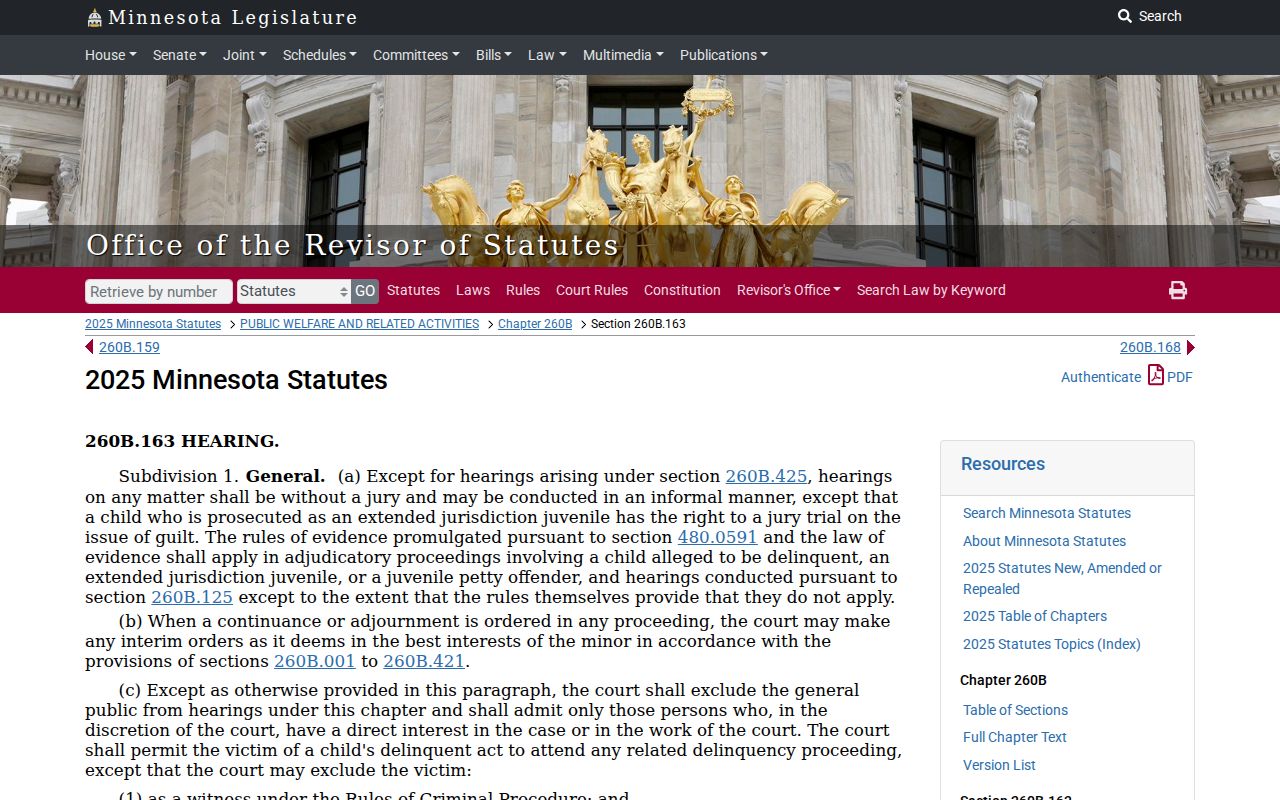
A hearing can be open to the public while its related records carry different legal limits.
Todd Criminal Docket Copy Requests
For a certified criminal record, contact Todd County Court Administration / Court Administrator Kim Peterson at the Todd County Courthouse, 221 First Avenue S., Suite 100, Long Prairie, MN 56347. You can also call 320-357-5005. The office opens Monday through Friday, 8:00 a.m. to 4:30 p.m. Give the case number, the exact document, and its date or index number. Add the copy type and how many copies you want. A printed MCRO page is not certified.
Minnesota copy-request guidance separates plain, certified, and exemplified copies. The Todd fee catalog sets a general $14 benchmark. That covers a certified document, certified printout, certified scan or picture, and certified screenprint. An exemplified uncertified product generally runs $14. Certified plus exemplified runs $28. Confirm the current fee, delivery method, and any local charge before you send a request.
Use the statewide form or a letter unless Court Administration tells you otherwise. Sealed material goes through the CON100 and CON101 access process first. If a judge grants access, submit that order with your copy request. Minnesota eFile and eServe handles filing and service, not the public criminal docket. No universal Todd County copy turnaround has been published. Ask about timing and prepayment when you request the record.